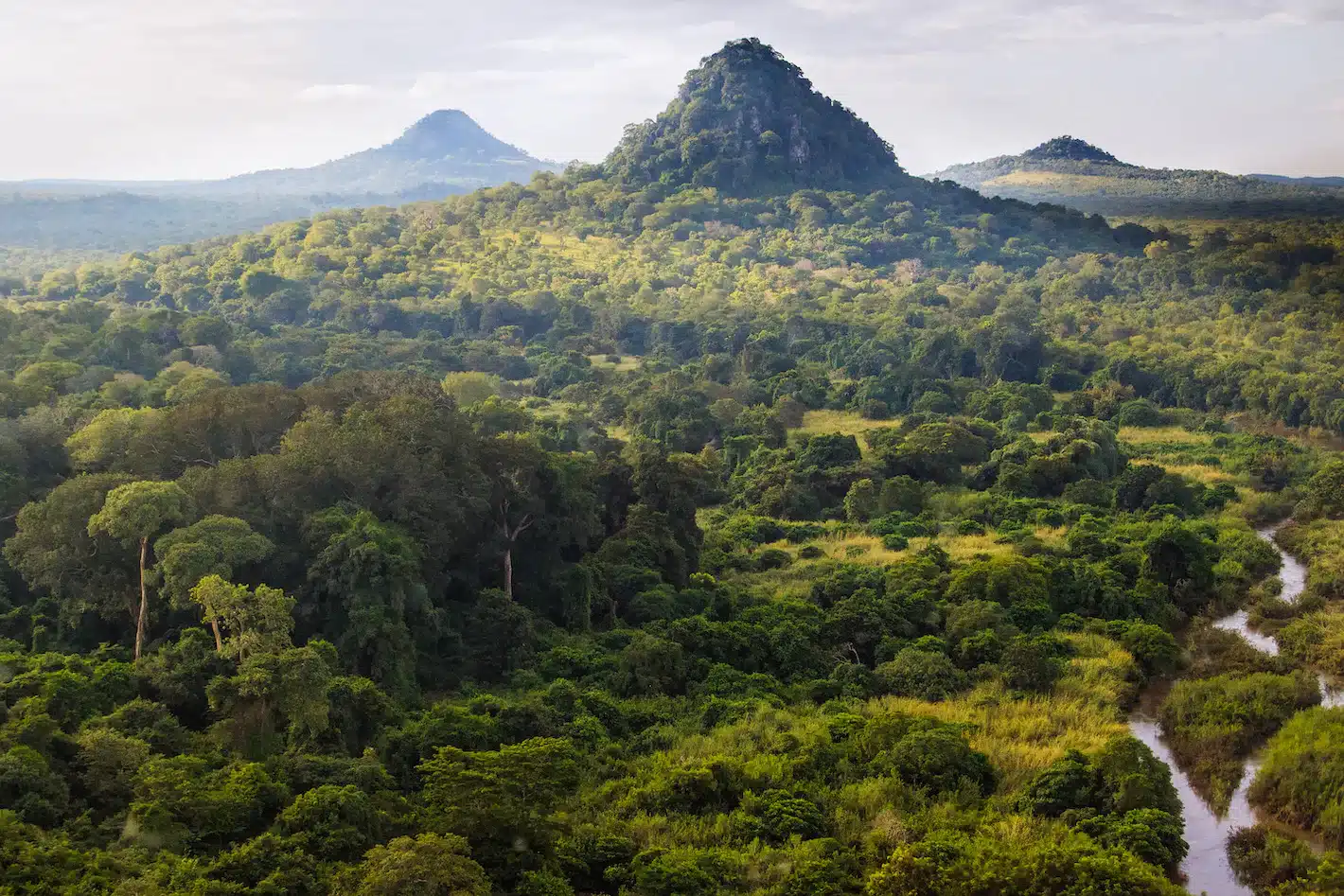
A Gorongosa National Park safari offers one of the most diverse and ecologically rich wildlife experiences in Africa. Located in central Mozambique, at the southern end of the Great Rift Valley, the park spans an extraordinary range of landscapes, from vast floodplains and winding river systems to dense forests and the slopes of Mount Gorongosa.
This geographic diversity defines the park. Seasonal rivers feed the Urema floodplain, creating a fertile ecosystem that supports large herbivore populations, while nearby woodlands and savanna provide habitat for predators and birdlife. The result is a layered wilderness where multiple ecosystems exist within a relatively compact area.
Often described as one of Africa’s most biodiverse national parks, Gorongosa has gained recognition not only for its wildlife recovery but also for its conservation-led safari model. Visitors do not simply observe wildlife here; they experience a landscape where ecological restoration and tourism operate together.
For travellers exploring Safari and Beach Holidays in Africa, Gorongosa introduces a different kind of safari environment—less crowded, more varied, and deeply connected to its natural systems.

Safari activities in Gorongosa focus on guided exploration and ecological interpretation. Visitors experience the park through a range of structured activities led by trained guides who understand both wildlife behaviour and landscape dynamics.
Game drives form the foundation of most safaris. Conducted in specialised vehicles, these drives follow routes across floodplains, savanna and woodland areas. Guides interpret animal movements, track species and explain how environmental factors influence wildlife behaviour.
Walking safaris provide a more immersive perspective. Accompanied by armed guides, visitors explore selected areas on foot, focusing on smaller details such as tracks, plant life and ecosystem interactions. These walks emphasise awareness and observation rather than distance covered.
Birdwatching plays a significant role, particularly during the wet season when migratory species arrive. Wetlands, riverbanks and forest edges create varied habitats that support diverse bird populations.
Photography safaris benefit from the park’s open landscapes and changing light conditions. The floodplain, in particular, offers wide views where large herds and dramatic skies combine to create compelling scenes.
Some areas also allow exploration of river and wetland systems, where guides explain seasonal water cycles and their impact on wildlife distribution. Across all activities, the emphasis remains on understanding the environment rather than simply moving through it.

Seasonality shapes the safari experience in Gorongosa more strongly than in many other parks. Understanding these seasonal patterns helps visitors align expectations with conditions.
The dry season, typically from May to October, offers more concentrated wildlife viewing. As water sources shrink, animals gather in predictable areas, particularly around the Urema floodplain. Vegetation thins during this period, improving visibility and making game drives more productive.
The wet season, from November to April, transforms the landscape. Rainfall expands rivers and floodplains, creating lush green environments and attracting migratory bird species. Wildlife disperses more widely, which can make sightings less concentrated but more varied.
This seasonal contrast defines Gorongosa’s appeal. The dry season suits travellers focused on traditional game viewing, while the wet season appeals to those interested in landscapes, birdlife and ecological processes.
Timing a Gorongosa National Park Safari depends on what visitors want to experience. Both seasons offer distinct perspectives on the park’s ecosystems.
A Gorongosa National Park Safari reveals how biodiversity depends on landscape variation. The park’s ecosystems support a wide range of species, each adapted to specific habitats shaped by water, vegetation and seasonal change.
At the centre lies the Urema floodplain. During the wet season, it expands into a vast inland delta, attracting large herds of waterbuck, reedbuck and other antelope species. As water levels recede in the dry season, animals concentrate around remaining water sources, creating dynamic wildlife viewing opportunities.
Elephants move between woodland and floodplain areas, while predators such as lions and African wild dogs follow prey across these shifting environments. Birdlife is particularly rich, with hundreds of species recorded across wetlands, forests and open savanna. Seasonal migrations bring additional species, making Gorongosa a significant destination for birdwatchers.
The park’s forests, including those on the slopes of Mount Gorongosa, add another ecological layer. These areas support smaller mammals, primates and a range of endemic plant species. The interaction between mountain catchments, rivers and floodplains sustains the broader ecosystem.
What distinguishes Gorongosa is not just the presence of wildlife, but how these species interact with their environment. A safari here highlights ecological processes rather than isolated sightings, offering a deeper understanding of how African wilderness systems function.

The Urema floodplain defines the structure and rhythm of a Gorongosa National Park Safari. This vast, low-lying basin collects seasonal water from surrounding rivers and mountain catchments, creating one of the most productive ecosystems in the park.
During the wet season, the floodplain expands into a shallow inland lake. Water spreads across grasslands, supporting large populations of herbivores such as waterbuck, reedbuck and other antelope species. These animals depend on the nutrient-rich grasses that grow as water levels shift.
As the dry season progresses, the floodplain contracts. Remaining water sources draw wildlife into smaller areas, increasing visibility and creating dynamic safari conditions. Predators follow these movements, making the floodplain a focal point for wildlife interaction.
This constant change gives Gorongosa a unique character. Visitors do not experience a static landscape. They observe a system that evolves through the year, shaping how animals move, feed and interact.
Understanding the floodplain helps travellers appreciate why wildlife patterns in Gorongosa differ from more predictable safari environments.
Birdlife forms a central part of the safari experience in Gorongosa. The park supports hundreds of species, making it one of the most important birding destinations in Mozambique.
Wetland areas attract waterbirds such as herons, storks and kingfishers, while open savanna supports raptors and ground-dwelling species. Forest zones add another layer, hosting species that rely on dense vegetation and higher rainfall.
Seasonal migration increases diversity even further. During the wet season, migratory birds arrive from Europe and other parts of Africa, taking advantage of the abundant water and food supply. This creates a noticeable shift in the sound and movement of the landscape.
Guides play an important role in interpreting birdlife. They identify species, explain migration patterns and connect bird behaviour to environmental conditions. Even visitors with limited birding experience often find this aspect of the safari engaging.
Birdlife adds detail and depth to a Gorongosa National Park Safari, complementing larger wildlife sightings and reinforcing the park’s ecological richness.
Gorongosa is widely recognised for its conservation and restoration efforts. The park has undergone significant ecological recovery, rebuilding wildlife populations and restoring natural systems.
Years of conservation work have focused on reintroducing species, protecting habitats and supporting local communities. As a result, wildlife numbers have increased steadily, and ecosystems have regained balance.
Visitors can observe this recovery in real time. Large herbivore populations continue to grow, and predator species are becoming more established across the park. This creates a safari experience that feels active and evolving rather than static.
Conservation also shapes how tourism operates. Safari activities follow guidelines that minimise environmental impact while supporting long-term sustainability. Lodges and guides work within this framework, ensuring that visitor experiences align with conservation goals.
For travellers, this adds another dimension to the safari. A visit to Gorongosa is not only about wildlife viewing but also about understanding how conservation supports the future of African ecosystems.
While the Urema floodplain dominates much of the park, Gorongosa’s diversity extends far beyond this central feature. The surrounding landscapes create multiple ecological zones that influence wildlife distribution.
Woodland areas support browsing species and provide shelter for predators. These environments offer a contrast to open plains, where visibility is higher and animal movements are easier to track.
River systems form natural corridors that connect different habitats. Wildlife uses these routes to move between feeding and watering areas, creating opportunities for varied sightings during game drives.
The slopes of Mount Gorongosa introduce yet another environment. Higher rainfall supports forest ecosystems with unique plant life and smaller species not commonly found in the lowlands.
This layered landscape allows visitors to experience multiple safari environments within a single destination. Each area reveals a different aspect of the park, reinforcing the sense that Gorongosa operates as a complete ecological system.

A Gorongosa National Park Safari stands apart from more established safari destinations in several important ways.
First, visitor density remains low. Travellers experience open landscapes without the vehicle congestion often found in high-traffic parks. This creates a more natural and uninterrupted connection with the environment.
Second, the safari focuses on ecosystems rather than isolated sightings. Guides explain how water, vegetation and animal behaviour interact, offering a deeper understanding of the landscape.
Third, the park’s conservation story shapes the overall experience. Visitors see a destination that continues to evolve, where wildlife populations grow and ecosystems recover over time.
Finally, Gorongosa offers a balance between accessibility and authenticity. It remains reachable through structured travel routes, yet retains a sense of remoteness that appeals to travellers seeking a quieter safari experience.
These factors combine to create a safari that feels educational, immersive and distinct within the broader African safari landscape.
Accommodation within and around Gorongosa centres on safari lodges and guided camps that provide structured access to the park. These properties operate as part of the broader conservation model, combining hospitality with guided wildlife experiences.
Lodges typically include game drives, guiding and park entry as part of the stay. Guests do not organise activities independently; instead, experienced teams manage daily schedules and ensure that safaris operate safely and effectively.
Options range from comfortable safari camps to more refined lodge environments, depending on traveller preference. Many properties focus on small group experiences, allowing guides to adapt activities to conditions and guest interests.
For those planning a broader Mozambique journey, Gorongosa lodges often form the inland component of itineraries that later connect to coastal destinations. Visitors frequently continue to beach locations such as Vilanculos or the Bazaruto Archipelago, where properties like Benguerra Island offer a contrasting coastal experience.
Explore our Gorongosa Safari Mozambique page for a deeper look at lodge options and how safari stays are structured within the park.

A Gorongosa National Park Safari differs from more established safari destinations in both scale and focus. While parks such as Kruger or the Serengeti are known for high-density wildlife viewing, Gorongosa offers a more ecosystem-driven experience.
Here, the emphasis shifts from checklist sightings to environmental understanding. Visitors observe how water systems shape wildlife movement, how vegetation cycles influence grazing patterns and how conservation efforts rebuild ecosystems over time.
The park’s recovery story also plays a role. Following periods of decline, Gorongosa has undergone extensive restoration, with wildlife populations steadily increasing. This ongoing process adds a sense of progression to the safari experience, where travellers witness not just wildlife, but ecological renewal.
For travellers seeking a safari that combines wildlife viewing with environmental insight, Gorongosa provides a distinct alternative within Africa’s safari landscape.
A safari in Gorongosa introduces travellers to one of Africa’s most diverse and evolving ecosystems. From floodplains and forests to large herbivore herds and returning predator populations, the park offers a layered and educational wildlife experience.
For those considering how Gorongosa fits into a wider journey, it can be combined with coastal destinations to create balanced itineraries. Explore our Safari and Beach Holidays in Africa to see how safari and coastline experiences connect.
Voyage2Africa designs tailored itineraries that incorporate Gorongosa into seamless travel plans, coordinating lodges, guiding and onward travel. Speak to our team to begin planning a safari that reflects both the landscapes and experiences that define this unique national park.