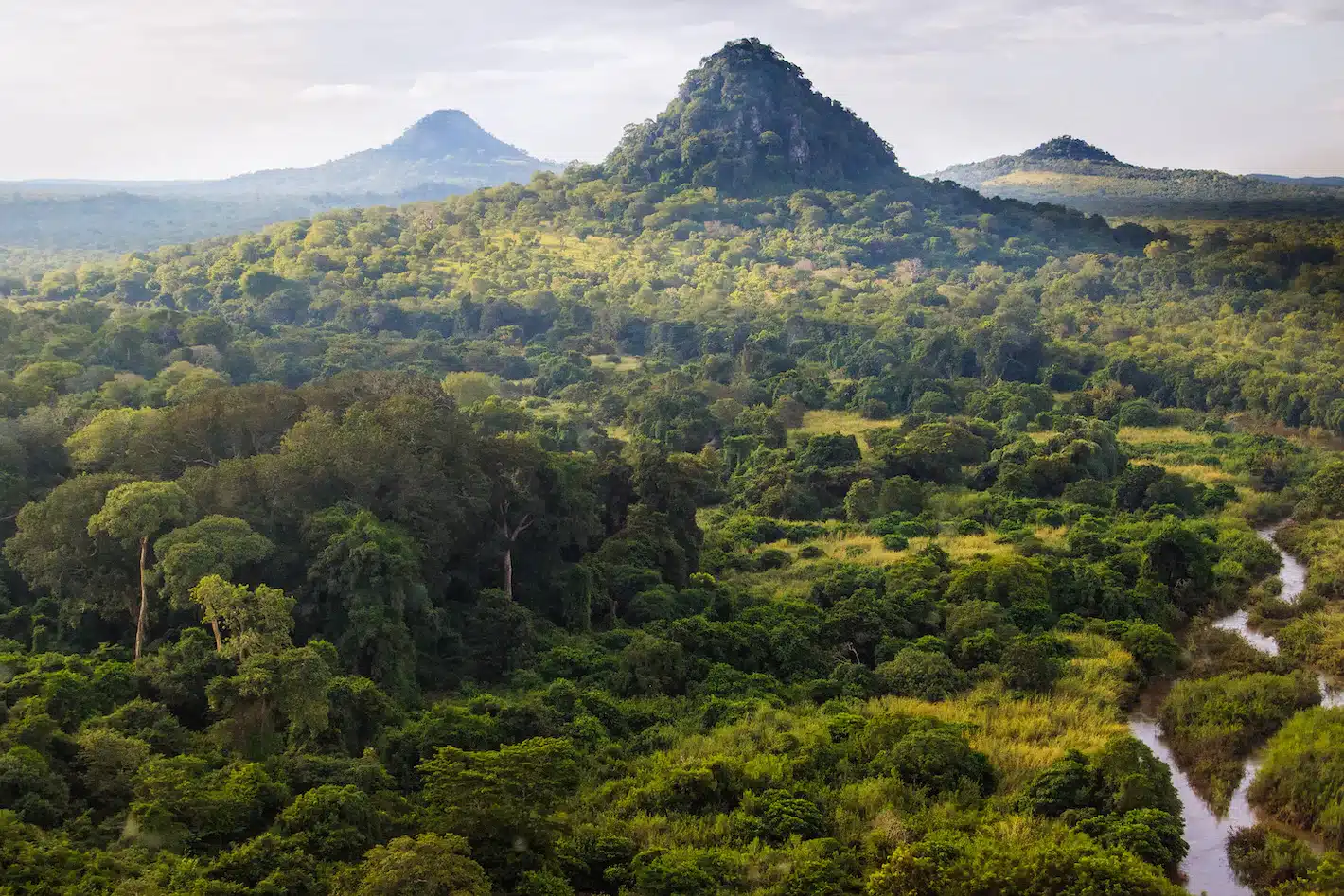
Gorongosa National Park offers a safari shaped by varied landscapes, wildlife restoration and the people working to protect its future. Located in central Mozambique, it brings together floodplains, woodland and wetlands with opportunities for guided wildlife exploration.
Visit for a standalone safari vacation or include Gorongosa in a wider African journey. A beach stay is optional: travelers interested in wildlife, birding and conservation can build their entire trip around the park.
Voyage2Africa helps you choose the camp, length of stay and travel arrangements that suit your interests. For a safari and beach holiday, we can also plan an extension to Mozambique’s coast or islands.
A safari in Gorongosa National Park is defined by diversity. The park includes floodplains, savanna, wetlands and the forested slopes of Mount Gorongosa, creating a rich ecosystem that supports a wide range of species.
Game drives focus on both large mammals and smaller ecological details, while guided walks provide a deeper understanding of the landscape. Birdlife is particularly strong, with over 400 recorded species across the region.
Unlike more commercial safari destinations, Gorongosa offers fewer vehicles and a more exploratory experience, making it ideal for travellers seeking a quieter and more immersive safari.
Game drives form the core of many stays. Guided walks and other experiences depend on the camp, season and your itinerary. Tell us whether your priorities are photography, birdwatching, wildlife viewing or conservation, so we can recommend enough time for the experiences that matter to you.
Muzimu Lodge and Chicari Camp are our priority options for travelers seeking a guided Gorongosa safari. Choose according to the accommodation style, setting, and experiences you want from your stay.
A longer visit can combine both camps, giving you time to explore different areas without adding another destination.
Compare our Gorongosa lodges and camps before selecting your accommodation.
Gorongosa is one of Africa’s most ecologically diverse safari destinations. Its landscapes support a wide range of wildlife, including:
The park is also a major birding destination, with wetlands, forests and floodplains supporting a wide variety of species.
Mount Gorongosa adds another dimension to the wider destination. Excursions require separate planning and should be checked against your dates, itinerary and the current operating arrangements.
Gorongosa is internationally recognised for its conservation success. After significant wildlife loss during regional conflict, the park has undergone a major restoration process supported by long-term partnerships.
Key initiatives include:
Tourism forms part of Gorongosa’s wider conservation and community work. For background on the park’s restoration and current initiatives, explore the Gorongosa Restoration Project.
Gorongosa works exceptionally well as part of a Mozambique safari and beach itinerary. Travellers often combine a stay in the park with coastal destinations such as Vilanculos and the Bazaruto Archipelago.
Combine Gorongosa with the Bazaruto Archipelago for a safari followed by an island stay. Benguerra Island and Bazaruto Island offer different accommodation choices; Vilanculos provides a mainland alternative.
The connection must be planned around your camp, flights and onward transfers. Depending on the itinerary, this can involve light-aircraft, charter or road arrangements. Do not assume a daily scheduled connection between Gorongosa and Vilanculos.
Voyage2Africa coordinates the route as one journey, matching the safari stay with the accommodation and pace you want at the beach.
Muzimu Lodge and Chicari Camp currently publish an operating season from April 1 to November 30. Confirm your camp’s dates before booking, particularly near the beginning or end of the season.
We recommend considering four or five nights for a focused safari, with a longer stay when you want to combine camps or allow more time for specialist interests.
Access is arranged around your itinerary, often using Beira as a gateway. Voyage2Africa will confirm the available flights and onward camp transfers for your travel dates.
The current page’s claim that Gorongosa closes every year until April 15 should be removed. Camp operating dates should not be presented as a universal rule for every park facility.
Tell Voyage2Africa your dates, number of travelers, and main safari interests. Let us know whether you want Gorongosa alone, a two-camp stay or an island extension.
Our owners and team bring 25 years of African travel experience to selecting accommodation and coordinating the journey. Explore our Gorongosa safari packages or speak to us about a tailored itinerary.
Speak to our team to plan your Gorongosa safari and combine it with a Mozambique beach holiday for a complete African travel experience.